Oman’s Cost Reflective Tariff (CRT)
Oman’s Authority for Public Services Regulation (APSR) sets the cost reflective tariff (CRT) for non-residential customers — government, commercial, industrial and tourism — that use more than 100 MWh of electricity a year. APSR reviews the tariff every year and publishes the next year’s rates by the end of December. For businesses in Oman, understanding CRT is the first step toward making solar an informed financial decision. For a turnkey commercial project, see our solar EPC contractor in Oman.
CRT Options for Commercial Consumers
Under APSR’s cost reflective tariff regulation, eligible customers can choose between three options:
- Variable tariff: follows the cost reflective structure, so the price changes with the time of day and the season.
- Fixed seasonal tariff: one rate in summer and another in winter, based on load level.
- Fixed non-seasonal tariff: one rate all year, based on load level.
Your current rate is on your electricity bill and in APSR’s published tariff for the year. We use it as the baseline when we calculate your solar savings.
Why Commercial Solar Makes Financial Sense
Here is why solar changes the economics for Omani businesses:
1. Peak Generation Meets Peak Rates
Solar panels produce most of their power between about 9am and 3pm. On a variable tariff, the most expensive hours fall in the day, when demand on the grid is highest. Every kilowatt-hour your building uses from its own solar system in those hours replaces the most expensive grid electricity.
The higher your self-consumption ratio — the more of your solar output you use on-site rather than exporting — the greater your financial return.
2. Oman Has Exceptional Solar Irradiance
With solar irradiance of 5.5–6.5 kWh/m²/day, Oman ranks among the best locations globally for commercial solar deployment. A correctly sized system in Muscat or Salalah generates consistent output year-round.
3. Grid Prices Are Rising
Electricity costs in Oman have been on an upward trajectory. Every year your grid electricity price increases, your solar savings grow proportionally. A system installed today locks in discounted energy costs for 25 years.
4. Simple, Low-Maintenance Operations
Once commissioned, a commercial solar system requires minimal intervention. With no moving parts in the panels and inverter warranties of 10+ years, the operational burden is minimal.
ROI Characteristics for Commercial Solar in Oman
Return on investment for commercial solar depends on several factors:
- System size (kW): Larger systems typically achieve better unit-economics
- Self-consumption ratio: Higher on-site usage during solar production hours maximises savings
- Grid tariff trajectory: As prices rise, solar ROI improves year on year
- Shading and orientation: Optimal placement maximises generation
For most commercial rooftop systems in Oman, the annual ROI typically ranges from 15% to 25% of the initial capital invested — often higher for businesses with high daytime consumption.
Payback Period
The payback period for commercial solar in Oman typically ranges from 4 to 7 years:
- Small commercial (50–100 kW): 3–5 years
- Medium commercial (100–300 kW): 4–6 years
- Large commercial/industrial (300 kW+): 5–7 years
After payback, the system continues delivering free electricity for another 15–20+ years with minimal maintenance costs. This means 60–75% of your total 25-year energy expenditure becomes savings — not a bill.
Generation Estimates
A well-designed commercial solar system in Oman produces approximately 1,400–1,600 kWh per kW per year. Here are typical figures:
- 50 kW system: ~72,500 kWh/year
- 100 kW system: ~145,000 kWh/year
- 200 kW system: ~260,000–290,000 kWh/year
Seasonal Variation
Solar generation in Oman varies significantly by season:
- Summer (May–Sep): Higher production (+20–25%) due to longer days, but panel efficiency drops 10–15% due to high ambient temperatures. Omani summer temperatures of 45–50°C reduce panel efficiency by 0.4–0.5% per degree above 25°C.
- Winter (Nov–Feb): Lower production (–15–25%) but panels operate at peak efficiency due to cooler ambient temperatures.
System Components
1. Solar Panels (PV Modules)
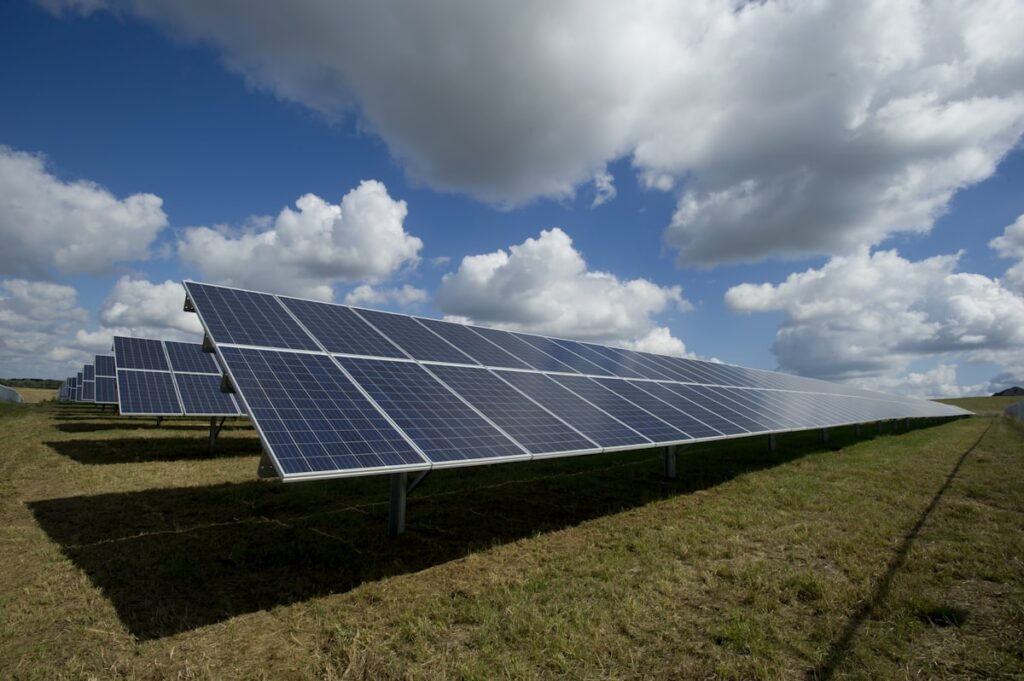
The most visible component — panels convert sunlight into electricity. Key options for commercial installations:
- Monocrystalline: 400–550 W per panel. Highest efficiency (19–22%), best for commercial rooftop where space is valuable.
- Bifacial: Captures reflected light from the roof surface, delivering 5–15% additional yield. Increasingly popular in Oman on metal rooftops.
2. Inverter
The inverter converts the DC electricity from panels to AC used by your building. The two main types:
- String Inverter: Most common for commercial systems (50–500 kW). One inverter manages a “string” of 10–30 panels. Cost-effective and reliable.
- Microinverter: One small inverter per panel. Better for complex layouts or partial shading. Higher cost but better performance in non-uniform conditions.
In Oman, string inverters are the standard choice for commercial installations due to their reliability and lower maintenance requirements.
3. Mounting Structure
Oman’s climate — extreme heat (up to 50°C), coastal humidity, and airborne sand — demands robust mounting systems:
- Material: Hot-dip galvanized steel or aluminium with stainless steel hardware
- Flat rooftops: Ballasted system (concrete blocks, 25–40 kg per unit). No roof penetration = no waterproofing risk. This is the preferred method for commercial buildings.
- Sloped rooftops: Direct mounting to rafters using aluminium clamps
- Ground-mounted: Used in industrial sites with available land; driven piles or concrete foundations
- Carport structures: Shade + solar in one — increasingly popular in Oman for car parks
4. ACDB (AC Distribution Box)
The ACDB is the protective hub connecting your solar system to the building’s electrical infrastructure. It is mandatory in Oman under the distribution network requirements and must be installed by a licensed electrical engineer with DCRP Level 2 certification.
Typical ACDB components for commercial solar:
- Main incoming switch (250–630 A depending on system size)
- Branch circuit breakers/fuses for each inverter
- AC overload protection (MC4 connectors and cable glands rated for system current)
- Earth leakage relay (ELR) — mandatory safety device
- Surge protection device (SPD) — protects against lightning transients
- Grid interconnection relay — ensures safe parallel operation with the grid
5. Wiring
Two distinct cable circuits in any commercial solar installation:
- DC cables (panels to inverter): 4–10 mm², double-insulated, UV-resistant, run in conduit. Sized at 1.25 × short-circuit current.
- AC cables (inverter to main distribution board): 10–400 mm² depending on inverter capacity. Typically XLPE or armoured cable, run in conduit or underground.
All cables must be sized per IEC standards and Nama’s requirements. Undersized cables create fire hazards — always use properly calculated conductor sizing.
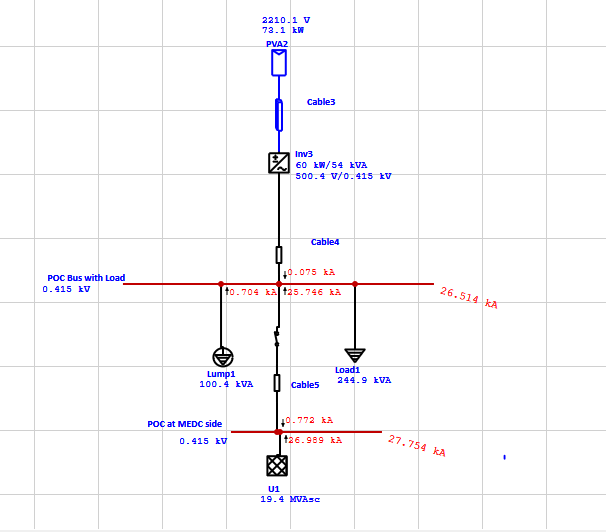
6. Electrical Chain — The Complete System Flow
Understanding the full sequence:
DC side: Solar Panels → String Inverter
AC side: String Inverter → ACDB → Building Main Distribution Panel → Point of Connection (POC) / kWh Meter → National Grid
Each stage must be sized and certified to ensure safe, compliant operation.
Frequently Asked Questions
What is the CRT (Cost Reflective Tariff) in Oman?
The cost reflective tariff (CRT) is the electricity pricing set by APSR for non-residential customers using more than 100 MWh a year. Customers can choose a variable tariff that changes by time and season, a fixed seasonal tariff, or a fixed non-seasonal tariff. APSR publishes each year’s rates in December. Understanding your tariff helps you time solar consumption for maximum savings.
What is the ROI for commercial solar in Oman?
Commercial solar in Oman typically delivers an annual ROI of 15–25%, depending on system size, self-consumption ratio, and electricity tariff trajectory. Higher self-consumption (using solar power on-site rather than exporting) produces better returns. ROI improves every year as grid electricity prices rise.
How long is the payback period for commercial solar?
Commercial solar systems in Oman typically reach payback in 4–7 years depending on size and usage patterns. After payback, the system generates free electricity for another 15–20+ years, meaning 60–75% of your total 25-year energy spend becomes savings rather than a cost.
What components make up a commercial solar system?
A commercial solar installation consists of: PV panels (monocrystalline or bifacial), string inverters or microinverters, AC Distribution Box (ACDB), DC and AC wiring sized per IEC standards, and a mounting structure rated for Omani conditions. The electrical chain runs: Panel → String Inverter → ACDB → Metering Panel → Point of Connection.
What makes Oman suitable for commercial solar?
Oman receives 5.5–6.5 kWh/m²/day of solar irradiance — among the highest globally. With a growing commercial and industrial sector, rising electricity costs under CRT, and regulatory support from APSR, Nama and DCRP, commercial solar is increasingly the most cost-effective energy solution for Omani businesses.
Ready to explore what commercial solar can do for your facility? Contact AL-DHAW Sustainability Energy for a feasibility study tailored to your consumption profile.