How Solar Panels Work in Omani Heat — Complete Performance Guide
Oman enjoys over 3,500 hours of sunshine per year, making it one of the best locations on Earth for solar energy. But there is a catch — the extreme summer heat that regularly exceeds 45°C actually reduces solar panel efficiency. Understanding how solar panels perform in Omani heat is essential for homeowners and businesses planning to invest in rooftop solar systems. Heat-ready design is part of our solar EPC services in Oman.
How Solar Panels Convert Sunlight to Electricity
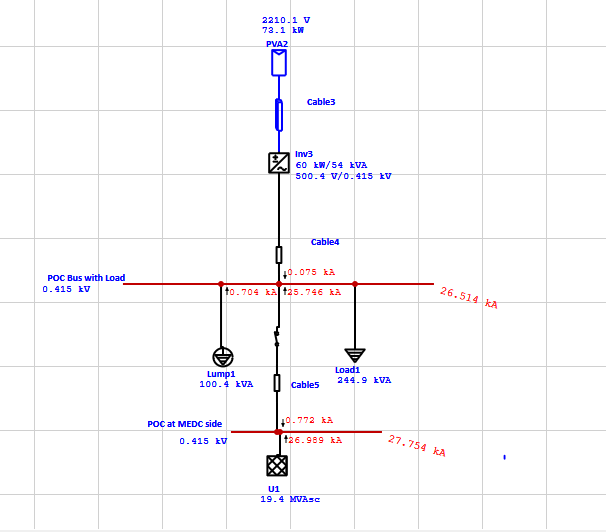
Solar panels use photovoltaic (PV) cells made from silicon semiconductors. When sunlight (photons) hits the silicon wafer, it excites electrons, creating a flow of direct current (DC) electricity. This DC power is then converted to alternating current (AC) by a string inverter before feeding into your home or the grid through an ACDB and metering panel.
The Role of Silicon in PV Cells
Most rooftop solar panels in Oman use monocrystalline silicon cells because they offer the highest efficiency — typically 20–23% under Standard Test Conditions (STC: 25°C, 1000 W/m² irradiance). Polycrystalline panels are cheaper but less efficient at 16–18%. In Oman’s market, monocrystalline panels from brands like Jinko, LONGi, and Trina Solar dominate installations due to their superior heat tolerance.
Why More Sun Does Not Always Mean More Power
While more sunlight increases energy production, higher temperatures reduce the voltage output of each cell. A panel rated at 550W at 25°C may only produce 480–500W when the cell temperature reaches 65°C — a typical Omani rooftop condition in summer. This is governed by the temperature coefficient of Pmax, usually expressed as %/°C.
The Temperature Coefficient — Why Heat Matters in Oman
Every solar panel has a temperature coefficient (TC) for maximum power (Pmax). This number tells you how much power drops for every degree Celsius above 25°C:
- Standard panels: TC of -0.35% to -0.40%/°C
- Premium panels (N-type TOPCon): TC of -0.29% to -0.30%/°C
- Best-in-class (HJT): TC of -0.26%/°C
Real Numbers for Oman
In Muscat during July, ambient temperatures reach 42–48°C. On a rooftop, solar panel cell temperatures easily reach 65–75°C because panels are dark and absorb heat. That means the cell is 40–50°C above STC. With a standard panel (TC = -0.35%/°C), the power loss is:
40°C above STC × -0.35% = -14% power loss
A 550W panel would produce only about 473W at peak heat. Premium N-type TOPCon panels with TC of -0.29%/°C lose only 11.6%, producing roughly 486W — a meaningful difference over 25 years.
Choosing the Right Temperature Coefficient for Oman
For Omani homeowners, selecting panels with a low temperature coefficient (closer to -0.26%/°C) is critical. The small premium you pay for N-type or HJT panels pays back significantly because Oman experiences high temperatures for 6–8 months of the year.
Heat vs. Irradiance — The Net Effect
Despite the efficiency loss from heat, Oman’s extremely high irradiance (5.5–6.2 kWh/m²/day Global Tilted Irradiance) more than compensates. A typical 10 kWp system in Muscat produces around 16,000–18,000 kWh annually — far more than the same system in Germany (about 10,000 kWh). The key insight: Oman’s solar advantage comes from high irradiance, even after accounting for heat losses.
Summer vs. Winter Production in Oman
Interestingly, the highest daily production in Oman often occurs in spring (March–May) and autumn (October–November), when irradiance remains high but temperatures are moderate. Summer months (June–September) see slightly lower specific yields per kWp despite longer sunshine hours, because the heat penalty offsets the irradiance gain.
5 Ways to Reduce Heat Losses on Omani Rooftops
1. Choose N-type TOPCon or HJT Panels
N-type panels have a better temperature coefficient and lower degradation over time. Brands like LONGi Hi-MO 6, Jinko Tiger Neo, and Trina Vertex S+ offer TC values around -0.29%/°C — significantly better for Oman’s climate.
2. Ensure Proper Mounting and Airflow
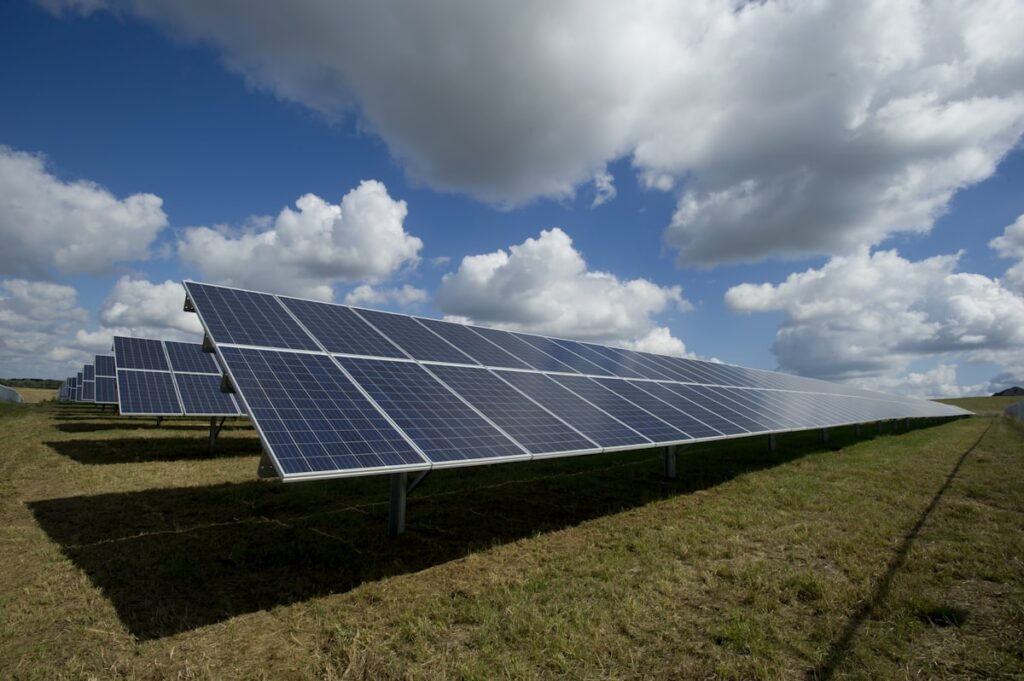
Solar panels need air circulation underneath to stay cooler. In Oman, avoid flush-mounted systems. Tilt-mounted panels with at least 10–15 cm clearance allow wind to cool the back surface, reducing cell temperature by 5–10°C compared to flush installation.
3. Use Light-Colored Roofing or Cool Roofs
Dark roofs radiate heat back onto panel surfaces. If possible, use reflective roof coatings or light-colored roofing materials. Studies show cool roofs can lower panel temperature by 3–5°C, adding 1–2% more annual yield.
4. Optimize Tilt Angle for Seasonal Yield
Oman’s optimal fixed tilt angle is around 22–25° facing south. This balances summer and winter production. Some installers suggest slightly flatter angles (15–18°) to maximize summer output, but the heat penalty makes the spring/autumn strategy (22–25°) more productive overall.
5. Clean Panels Regularly in Summer
Oman’s summer brings dust storms (shamals) that coat panels in fine sand. A dusty panel can lose 15–25% efficiency on top of heat losses. Weekly or biweekly cleaning is essential during summer months. Al-Dhaw offers professional cleaning as part of its maintenance packages.
The Omani Solar System Chain — From Sun to Socket
Understanding how heat affects each component in the solar energy chain helps you make better decisions:
- Solar Panels: Heat reduces voltage and power output (addressed above).
- String Inverter: Inverters also lose efficiency in heat — most are rated to operate up to 60°C ambient. Install inverters in shaded, ventilated locations.
- ACDB (AC Distribution Board): Contains ELR (Earth Leakage Relay), SPD (Surge Protection Device), and IPR (Internal Protection Relay). Heat can cause nuisance tripping — ensure proper enclosure ventilation.
- Metering Panel: NAMA-approved kWh meters are calibrated for Omani conditions.
- Point of Connection (POC): Must comply with NAMA regulations and the 50% rule for connected load.
Frequently Asked Questions
Do solar panels work at 50°C in Oman?
Yes, solar panels continue to work at 50°C ambient temperature, though with 12–15% reduced output compared to rated power. The high irradiance in Oman still makes them very productive even at peak heat.
What is the best solar panel for Oman’s climate?
N-type TOPCon or HJT panels from brands like LONGi, Jinko, and Trina Solar are best for Oman due to their lower temperature coefficient (-0.29%/°C vs -0.35%/°C for P-type panels) and better heat performance.
How much power do solar panels lose in Oman’s summer?
Depending on the panel quality, expect 10–15% power loss at peak summer temperatures compared to the rated (STC) output. Premium panels lose closer to 10%, standard panels closer to 15%.
Does cleaning solar panels improve output in Oman’s summer?
Absolutely. Dust from shamals can reduce output by 15–25%. Combined with heat losses, a dirty panel in July could operate at only 65–70% of its rated capacity. Regular cleaning is essential in Oman.
Is Oman still a good solar investment despite heat losses?
Yes. Even with heat losses, Oman’s solar irradiance of 5.5–6.2 kWh/m²/day makes solar investment very attractive. A typical residential system pays for itself in 4–6 years, compared to 8–12 years in cooler European countries.
Conclusion — Make the Most of Oman’s Sunshine
Oman’s extreme heat does reduce solar panel efficiency, but the country’s outstanding irradiance more than compensates. By choosing panels with a low temperature coefficient, ensuring proper installation with good airflow, and maintaining regular cleaning, Omani homeowners can maximize their solar investment.
At Al-Dhaw for Sustainable Energy, we specialize in designing and installing solar systems optimized for Oman’s unique climate. Our DCRP S2-certified engineers select only the best heat-resistant panels and ensure your system delivers maximum yield year-round.
Ready to go solar in Oman? Contact Al-Dhaw today for a free site assessment and customized system design tailored to your roof and energy needs.