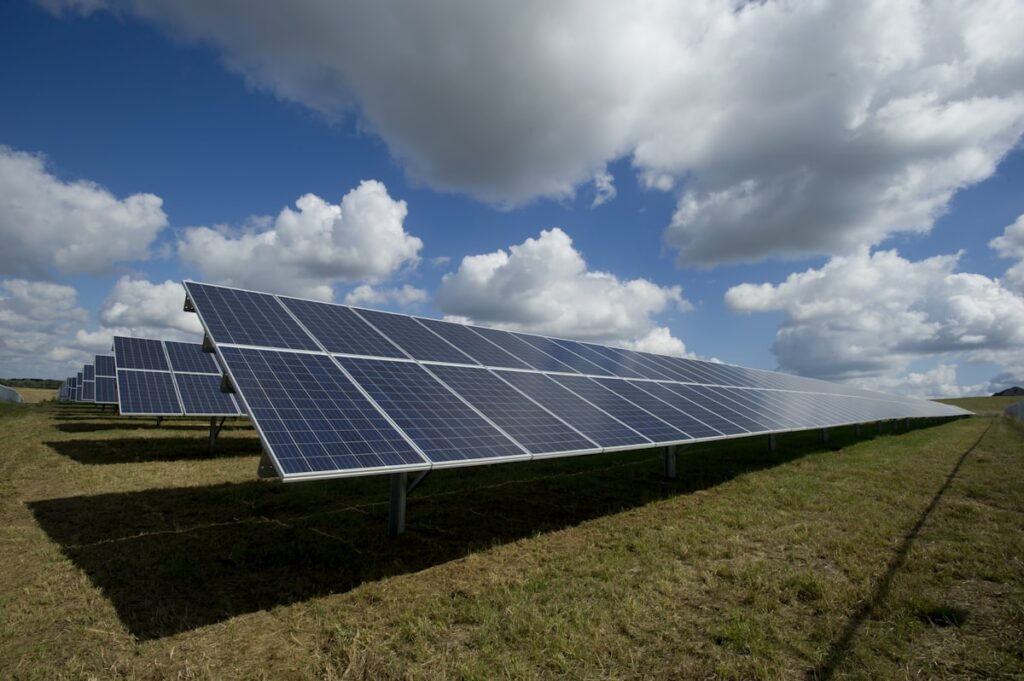
Dutch startup Moonwatt has presented a new sodium-ion storage system for use in utility-scale PV plants at The Smarter E trade show in Munich, Germany.
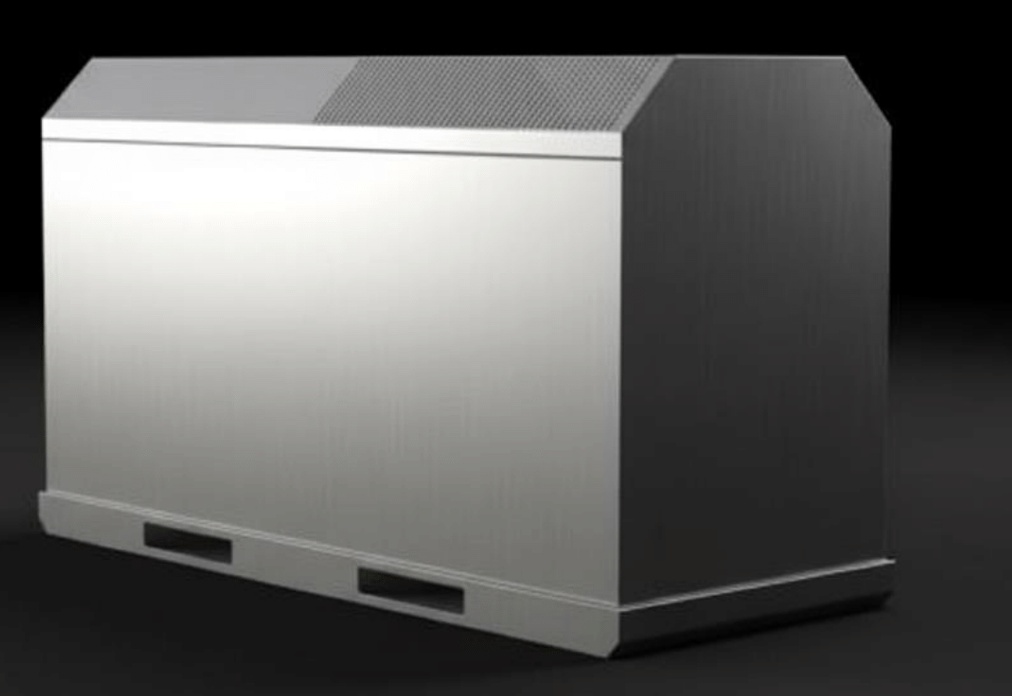
“Instead of relying on large, containerised systems, Moonwatt develops small, modular enclosures that are easier to mass-produce, install, maintain and replace,” a company spokesperson told pv magazine. “Moonwatt’s smaller battery storage units are distributed across the entire ground-mounted PV array. This is possible because the batteries are cooled entirely passively.”
The system is available in DC- and AC-coupled versions, offering flexibility for different solar plant configurations.
Monopod 1500V / 4-Hour Hybrid System Specifications
The Monopod 1500V / 4-hour Hybrid system features a DC-coupled architecture that reportedly reduces electrical balance-of-plant (BOS) costs by 50%. It uses a modular design with a stated lifetime of 12,000 cycles. The manufacturer claims its DC-coupled interface to the PV system eliminates multiple conversion losses while achieving 94% efficiency from solar to battery to grid.
Each inverter block provides 350 kVA of AC apparent power, 350 kW of bidirectional AC active power, and operates at 800 V AC. The system supports a maximum PV input power of 600 kW, with a DC voltage range of 500 V to 1,100 V. It also integrates 12 maximum power point trackers (MPPTs), each with five strings.
The configuration accommodates between one and seven Monopod units per inverter block, enabling battery AC power to range from 50 kW to 354 kW, while AC energy capacity scales from 202 kWh to 1,416 kWh.
Sodium-Ion Battery Technology — Lithium-Free and Heat-Tolerant
Moonwatt uses sodium iron phosphate pyrophosphate (NFPP) cells, a polyanion sodium-ion architecture prized for exceptional thermal stability and complete absence of lithium, cobalt, nickel, or manganese. This makes the cells inherently safer and more cost-effective than conventional lithium-ion batteries, with raw materials that are abundant and widely available.
Passive Cooling — A Game-Changer for Hot Climates
The passive cooling architecture delivers a measurable efficiency advantage, losing up to 25% less energy per cycle than a conventional actively cooled lithium-ion system, where fans, pumps and HVAC equipment consume auxiliary power continuously. The Moonpod units draw zero auxiliary power for cooling thermal management and run silently thanks to the complete absence of active cooling.
“We want to replicate the success that small solar string inverters had over large centralised inverters,” the spokesperson said. “The solar industry proved that distributed, modular power electronics outperform large central units in reliability, serviceability, and ultimately cost. We believe the same transition is now coming for battery storage.”
Installation and Retrofitting — No Crane or Concrete Needed
Weighing under 3.5 tons, each Moonpod unit can be handled with a standard forklift, with no crane required, and placed directly on flattened soil or gravel with no concrete foundations needed. The same product suits retrofits of existing solar plants, connecting on the low-voltage DC or AC side without redesigning the plant’s electrical architecture or adding medium-voltage infrastructure.
Relevance for Oman and the GCC Energy Market
Sodium-ion technology holds particular significance for the Gulf region, where extreme summer temperatures negatively impact lithium-ion battery performance and lifespan. Moonwatt’s passive cooling system makes it ideally suited for Oman’s climate, maintaining high efficiency without additional cooling energy consumption.
As Oman accelerates its renewable energy deployment — from the 500 MW Ibri solar farm to the 2.7 GW hybrid renewables project and green hydrogen developments in Duqm — efficient energy storage becomes a critical enabler of the nation’s Vision 2040 targets.
The company is present at Intersolar Europe in Munich from June 25–27 (Booth C2.190), where the Moonpod system will be on public display.
Frequently Asked Questions
What is the Moonwatt sodium-ion storage system?
It is a modular energy storage system using NFPP sodium-ion cells designed for utility-scale solar plants. It features passive cooling and a distributed architecture that requires no complex infrastructure.
How does sodium-ion compare to lithium-ion?
Sodium-ion batteries contain no lithium, cobalt, nickel, or manganese — making them safer and more cost-effective. The raw materials are abundant, and the chemistry offers superior thermal stability, especially in high-temperature environments.
What is the system’s efficiency?
The system achieves 94% efficiency from solar to battery to grid in its DC-coupled version, and 93% in the AC-coupled version.
Is this system suitable for Oman’s climate?
Yes. The passive cooling design makes it ideal for Oman’s hot climate, consuming no auxiliary power for thermal management and losing 25% less energy per cycle compared to conventional actively cooled systems.
What is the expected lifetime?
The system offers a lifetime of 12,000 charge cycles, making it suitable for long-duration applications in utility-scale solar installations.
Conclusion
Moonwatt’s new technology represents a significant advancement in utility-scale energy storage, particularly for hot climate regions like the Gulf. The combination of sodium-ion chemistry, passive cooling, and modular design delivers a practical and cost-effective solution to the challenges facing renewable energy deployment in the region. For professional consultation on solar and storage solutions, contact Al-Dhaw Sustainability Energy.