Skip to content
As the world continues to address the challenges of climate change and the urgent need to transition away from fossil fuels, countries like Oman are taking bold steps to shape their energy futures. Oman, blessed with abundant solar radiation and a clear strategic vision, is rapidly emerging as a leader in the adoption of solar energy. The Sultanate’s ambitious plans to integrate renewable energy into its national energy mix go beyond reducing its reliance on oil and gas. With the active participation of innovative entities like a solar PV company in Oman, these efforts are also aimed at fostering a sustainable, green economy that benefits both its citizens and the environment.
In this article, we will explore the fascinating world of solar projects in Oman, examining how initiatives like Oman’s growing solar PV sector and widespread solar installation in Oman are transforming the country’s energy landscape and paving the way for a more sustainable future.
Oman’s Strategic Expansion into Solar Energy
Government Policies and Solar Investments
Oman’s strategic expansion into solar energy is powered by robust government policies and a strong commitment to renewable energy. The Sultanate has set ambitious goals under its Oman Vision 2040, aiming for over 20% of national energy consumption to come from renewable sources by 2040. These goals are backed by specific policies designed to liberalize the electricity market and encourage the adoption of renewable energy solutions.
One notable policy unveiled by the Ministry of Energy and Minerals focuses on self-generation, direct sale, and wheeling of electricity. This policy empowers consumers to generate their own electricity using renewable sources. Importantly, it also simplifies the process for small-scale projects by exempting them from direct coordination with the Ministry, provided their production capacity remains below a defined threshold.
Major Solar Projects and Their Capacities
Oman is experiencing a significant surge in solar energy projects, both in terms of capacity and the number of installations. The country has set an ambitious target of achieving 3,050 MW of renewable energy capacity by 2025, with solar energy forming a key component of this strategy.
In the small and mid-scale solar PV segment, Oman is witnessing remarkable growth. The total generation capacity is expected to reach approximately 130 MW by the end of 2025, up from 92.5 MW in 2024. This expansion is driven by more than 400 new applications for solar PV connections received in 2024, bringing the total number of installations to 856 by the end of that year. To support these developments, the government introduced a technical guideline for solar energy in Oman, streamlining the process for both residential and commercial installations and ensuring they meet required safety and operational standards.
These developments are supported not only by government initiatives but also by the active participation of utilities like the Nama Electricity Distribution Company (NEDC). The NEDC plays a pivotal role in managing grid-connected solar PV projects and ensuring compliance with technical and regulatory standards. Its dedicated solar PV unit guides each installation through essential stages, including initial enquiry, design approval, and commissioning, ensuring a smooth transition to renewable energy.
Technological Innovations Driving Oman’s Solar Projects
Cutting-edge Technologies in Use
Oman’s solar projects are being propelled forward by the adoption of cutting-edge technologies that enhance efficiency, reduce costs, and improve overall performance. One of the most significant advancements is the domestic production of solar cells and modules. The upcoming facility by JA Solar in the SOHAR Freezone, scheduled to start operations in the first quarter of 2026, will boast an impressive annual production capacity of 6 GW of solar cells and 3 GW of solar modules.
This facility will integrate all key components—from polysilicon to modules—utilizing state-of-the-art technologies to produce high-quality, affordable solar panels. Local production will not only support Oman’s solar projects but also position the country as a major player in the global solar PV supply chain.
Integration with Existing Energy Infrastructure
The integration of solar power into Oman’s existing energy infrastructure is another area where technological innovations are driving progress. For example, the Barka 500 MW Solar PV Project, led by ACWA Power, will incorporate its generated power into the Main Interconnected System (MIS), which supplies electricity to the northern regions of Oman, including Muscat. This integration is enabled by advanced grid connection technologies, ensuring the seamless incorporation of solar power into the national grid and enhancing the stability and efficiency of the overall energy system.
Additionally, projects like the Manah I Solar Project are utilizing cutting-edge grid connection technology to guarantee smooth integration of solar power. This technology facilitates real-time monitoring and control, allowing for better management of energy distribution and minimizing the likelihood of grid instability.
Such innovations are essential for maintaining the reliability of the power supply as Oman increasingly relies on renewable energy sources.
Sustainable Impacts of Solar Power in Oman
Environmental Benefits
The adoption of solar power in Oman is yielding significant environmental benefits, aligning with the country’s commitment to reduce its carbon footprint and achieve Net Zero emissions by 2050. One of the most notable advantages is the reduction in greenhouse gas emissions. Solar energy generation produces zero emissions during operation, making it a clean and renewable alternative to fossil fuels.
This shift helps Oman meet its climate change commitments and contributes to global efforts to combat climate change. Additionally, the integration of solar energy reduces Oman’s reliance on natural gas, the primary source of energy in the country. By diversifying the energy mix, Oman strengthens its energy security and mitigates the risks associated with volatile global energy markets. This diversification is a key component of Oman Vision 2040, aiming to ensure a sustainable and secure energy future fueled by expanded renewable energy in Oman.
Economic and Social Advantages
The economic benefits of solar power in Oman are substantial. The declining costs of photovoltaic (PV) panels have made solar energy an attractive and cost-effective option for power generation.
This cost reduction is particularly beneficial for processes like water desalination, where solar thermal desalination processes are being tested and are expected to become commercial solutions soon. This not only reduces operational costs but also enhances the economic viability of these critical services.
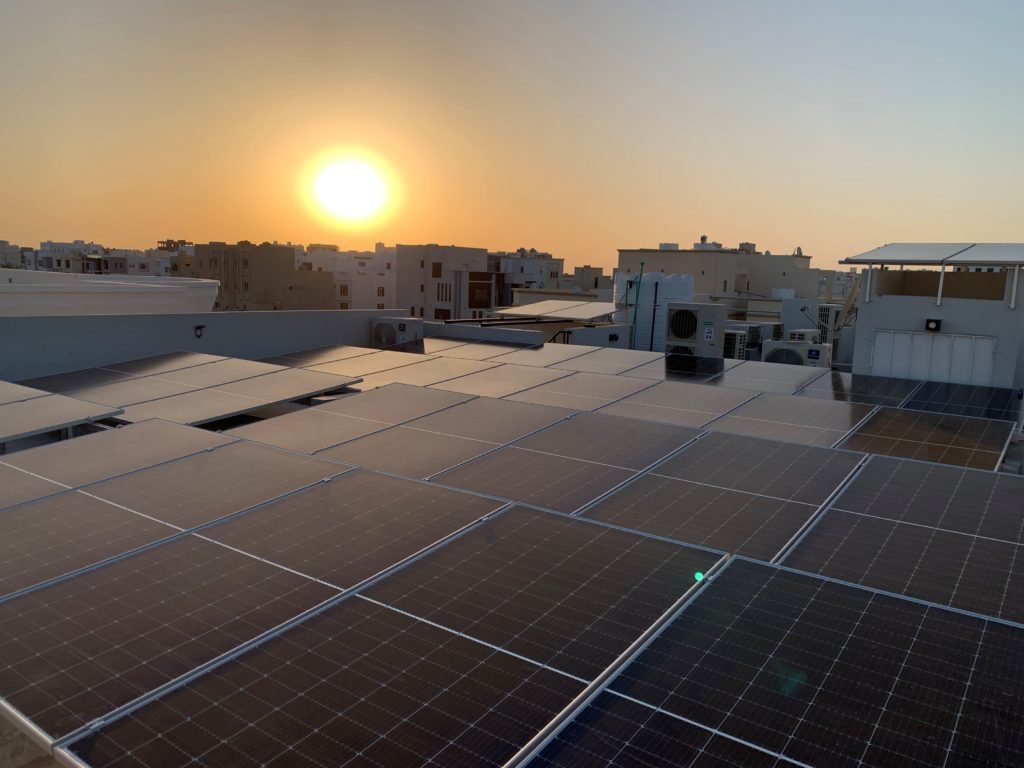
Solar energy also has significant social implications. By promoting the installation of rooftop solar panels, Oman is empowering homeowners and businesses to generate their own electricity. The Authority for Electricity Regulation Oman (AER) is facilitating this by allowing surplus electricity to be sent back into the national grid, creating a more decentralized and community-driven energy system.
This approach not only reduces energy bills for consumers but also fosters a sense of community involvement in sustainable energy practices. Furthermore, the development of large-scale solar projects is creating new job opportunities and stimulating local economies. Projects such as the 200MW solar plant in Dakhiliyah Governorate, part of Oman’s National Energy Strategy 2040, are not only generating clean energy but also contributing to economic growth and social development in the regions where they are located.
Conclusion
In conclusion, Oman’s journey into solar energy serves as a beacon of hope for a sustainable future. With groundbreaking projects like the 500 MW Barka Solar PV Project and the Ibri III Solar IPP, Oman is making remarkable progress in reducing its dependence on fossil fuels and achieving its renewable energy targets.
The integration of solar power into the national grid, supported by technological innovations and robust government policies, is reshaping the energy landscape. As Oman continues to harness the power of the sun, it sets a compelling example for other nations to follow. Let us embrace this transition, actively support these initiatives, and work together toward a cleaner, more sustainable world.
FAQ
What are Oman’s targets for renewable energy integration into its electricity generation by 2030?
Oman aims to generate 30% of its electricity from renewable sources by 2030, primarily through onshore wind and solar projects. The country also targets producing 1 million tonnes of green hydrogen annually by the end of the decade.
How much solar power capacity does Oman need to install by 2030 to stay on track for its net-zero emissions goal?
Oman needs to install a minimum of 13 GW of solar power capacity by 2030 to stay on track for its net-zero emissions goal.
What are some of the notable solar and wind projects currently underway or planned in Oman?
Notable projects include the Manah 1 and Manah 2 solar projects, which will add 1,000MW to the grid; the Riyah-1 and Riyah-2 wind projects, each with a capacity of 100MW; the North Solar project, contributing 100MW; and the Dhofar 1 Wind Energy Project, with 50MW. Additionally, Oman plans to develop a 600MW Concentrated Solar Power (CSP) project in Duqm and several other wind and solar projects by 2029.
Which international and local companies are involved in the development of solar independent power projects (IPPs) in Oman?
International and local companies involved in Oman’s solar IPPs include EDF Renewables, Korea Western Power Company, and Sembcorp. Locally, Nama Power and Water Procurement Company (PWP) and Oman Power and Water Procurement Company (OPWP) are key entities facilitating these projects.